


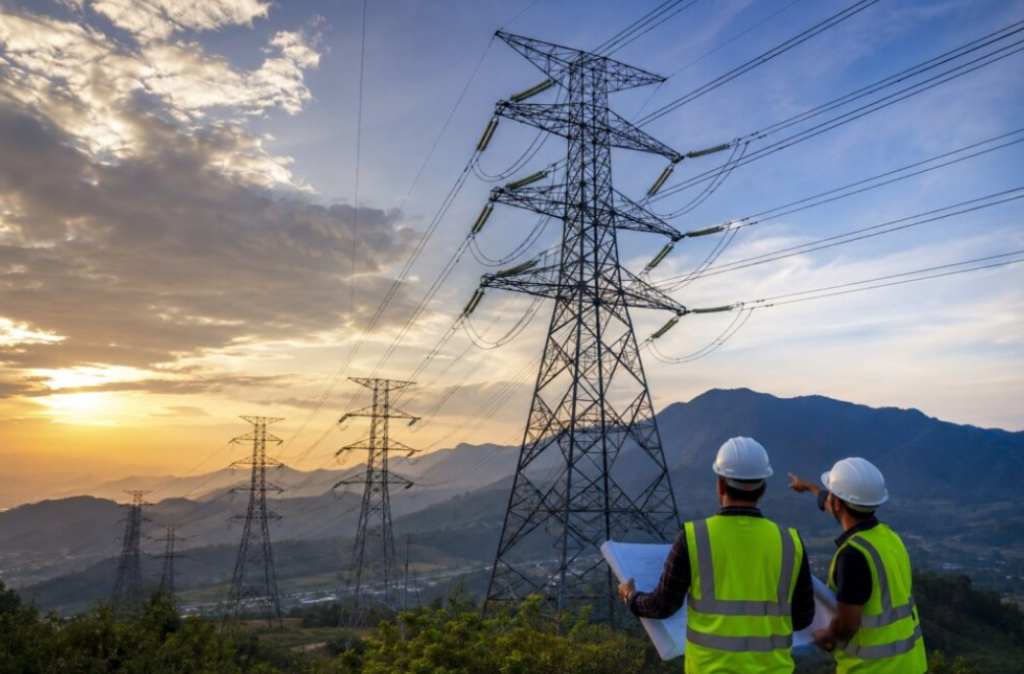
Kathmandu: Nepal Electricity Authority’s (NEA) decision to develop four transmission line projects under the Tariff-Based Competitive Bidding (TBCB)/BOOT (Build, Own, Operate and Transfer) model has marked a significant milestone in encouraging private-sector participation in Nepal’s transmission infrastructure. A total of 18 national and international companies and consortiums from Nepal, India, China, the United States, and other countries have submitted Expressions of Interest (EOIs) for the projects.
A notable feature of the bidding process is the strong participation of Nepali private-sector companies and Nepal-led consortiums. This reflects the growing role of domestic companies in transmission infrastructure development, which has traditionally been led by the government. The participation also signals increasing private investment, technical expertise, and industrial collaboration within Nepal’s energy sector.
Several domestic companies and joint ventures have submitted proposals independently or in partnership for different transmission line projects. Nepali and Nepal-led participants include Power Transmission Company Nepal, High Himalaya Hydro Construction, Shivashree-Danfe Joint Venture, Sigma Construction and Hulas Steel Industries Limited, Universal-Mountain Consortium Nepal, Balephi Hydropower/Litmus Cable/Sharma & Company Consortium, Sharma & Company/Balephi/Litmus/Hulas Steel Joint Venture, Balephi Hydropower/Sharma & Company/Litmus Cable/JED Infra Joint Venture, Paradise Builders/Applied Engineering Nepal/Absolute Projects India Consortium, and K&A EPC/K&A Engineering/Cosmic Joint Venture (USA-Nepal).
Among these, Power Transmission Company Nepal, High Himalaya Hydro Construction, Shivashree-Danfe Joint Venture, and Balephi Hydropower/Sharma & Company/Litmus Cable/JED Infra Joint Venture have submitted EOIs for TL-4. The Balephi Hydropower/Litmus Cable/Sharma & Company Consortium has applied for TL-3, while the Sharma & Company/Balephi/Litmus/Hulas Steel Joint Venture has submitted an EOI for TL-2. Sigma Construction and Hulas Steel Industries Limited have shown interest in TL-1, TL-3, and TL-4, while the Universal-Mountain Consortium Nepal has applied for TL-3 and TL-4.
The participation of Nepali companies demonstrates the growing capacity, confidence, and competitiveness of the domestic private sector in developing large-scale transmission infrastructure. As transmission networks become increasingly important alongside hydropower generation, this level of private-sector engagement is viewed as a positive step toward strengthening Nepal’s long-term energy infrastructure.
Among international participants, Power Grid Corporation of India Limited has submitted EOIs for TL-1, TL-2, and TL-3, while Ashoka Buildcon Limited has applied for TL-1 and TL-2. Techno-Enterprisen/Rausina Industry/Anand Solar India has expressed interest in TL-1, TL-3, and TL-4, while Viviana Power Tech India has applied for TL-3 and TL-4. Other international participants include Risonia Limited, Megha Engineering & Infrastructures, TBEA, and China National Machinery Import & Export Corporation.
Under the Tariff-Based Competitive Bidding/BOOT model, the selected developer will be responsible for conducting detailed studies, arranging project financing, constructing, operating, and maintaining the transmission line before handing over the infrastructure to the Nepal Electricity Authority after the concession period. Project selection will be based on technical capability, financial strength, project understanding, and the most competitive annual transmission service charge rather than the nationality of the developer.
Among the four projects, the Sitalpati (Arun Hub)-Inaruwa 400 kV Transmission Line will extend approximately 95 kilometers from Sankhuwasabha to Sunsari and is expected to facilitate the evacuation of around 4,400 MW of electricity from existing and planned hydropower projects in the Arun Corridor.
The Tingla-New Khimti-Sunkoshi Hub-Dhalkebar 400 kV Transmission Line, approximately 134 kilometers long, will pass through Solukhumbu, Okhaldhunga, Ramechhap, Dolakha, Sindhuli, and Dhanusha, with an estimated transmission capacity of 4,080 MW.
Similarly, the Dandakhet-Burtibang 132 kV Transmission Line, stretching approximately 33 kilometers, will connect Myagdi and Baglung districts and carry around 250 MW of electricity. The Ridi-Tamghas 132 kV Transmission Line, approximately 28 kilometers long, will connect Palpa and Gulmi districts with an estimated transmission capacity of 225 MW.
According to the submitted EOIs, the Ridi-Tamghas project attracted the highest interest, receiving 14 proposals. The Dandakhet-Burtibang project received 12 proposals, followed by Sitalpati-Inaruwa with 9 proposals, while the Tingla-New Khimti-Sunkoshi Hub-Dhalkebar project received 7 proposals.
In the next phase, all submitted EOIs will undergo detailed technical and financial evaluations. Companies and consortiums shortlisted through this process will be invited to participate in the Request for Proposal (RFP) stage, where the final developer will be selected based on the most competitive annual transmission service charge.
As Nepal continues to expand its hydropower generation capacity, transmission infrastructure has become a critical national priority. Delays in transmission line development can directly affect power evacuation, domestic electricity supply, industrial growth, and cross-border electricity trade. Consequently, strengthening transmission infrastructure is closely linked to Nepal’s energy security, industrial development, and long-term economic strategy.
The introduction of the competitive BOOT model presents an opportunity to make transmission infrastructure development more transparent, investment-friendly, and performance-oriented. With well-structured projects, balanced risk allocation, and financially sustainable frameworks, greater private-sector participation is expected to play a vital role in accelerating Nepal’s energy infrastructure development.






प्रतिक्रिया दिनुहोस्