


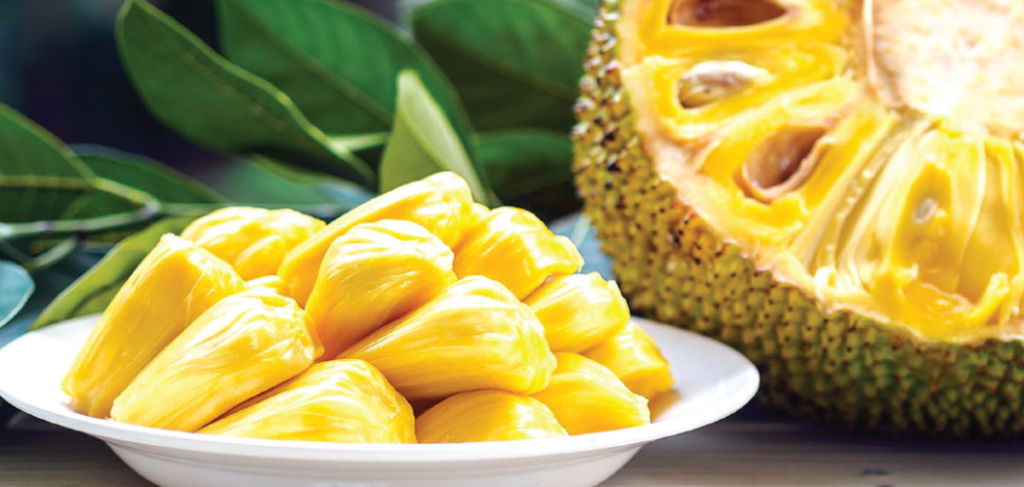
It’s jackfruit season in Nepal and markets across the Kathmandu Valley are bursting with its distinctive aroma and golden sweetness. At bustling local markets like Kalimati and Pepsicola, heaps of ripe jackfruits are on full display, drawing in curious customers and fruit lovers alike.
A vendor at Pepsicola Market quoted the price: “It’s around Rs. 70 per kilogram for whole fruit, and Rs. 150 per kilogram for just the edible flesh.”
Despite its abundance and popularity among older generations, many urban youths shy away from this tropical delight, citing its unusual size and sticky texture. “I’m not fond of it, but my father eats it almost every day,” said Abhaya Subedi, a visitor at a jackfruit stall. Others express concerns about its sweetness affecting blood sugar levels.
A Nutritional Powerhouse
Though jackfruit may be underestimated by some, scientific studies confirm its wide range of health benefits. Often dubbed the “jack of all fruits,” jackfruit is packed with essential nutrients vitamins, minerals, phytonutrients, carbohydrates, fiber, electrolytes, and plant-based proteins.
And it’s not just the flesh the seeds are also incredibly nutritious. Usually discarded, these gravel-like seeds are actually a rich source of protein and can be roasted, boiled, or added to curries for both flavor and nourishment.
From aiding digestion to promoting healthy skin, both jackfruit and its seeds support:
- Better metabolic health
- Youthful skin and wrinkle reduction
- Blood pressure regulation
- Blood sugar balance
- Digestive regularity
- Stronger bones and improved vision
- Anemia prevention
- Enhanced immunity and respiratory health
- Reduced risk of heart disease, ulcers, and thyroid disorders
Lack of Government Attention
Despite its remarkable benefits and strong cultural presence, jackfruit farming remains largely non-commercial in Nepal. Most trees are grown on a small scale for household use.
“There’s little to no priority from the government regarding jackfruit cultivation,” says horticulture expert Gopal Prasad Shrestha. “Given its contribution to food security and health, the government should initiate research and promote its production nationwide.”
According to data from the Ministry of Agriculture and Livestock Development, jackfruit is cultivated on approximately 2,300 hectares, but only 1,900 hectares actively produce fruit. Annual production stands at around 2,200 tonnes a modest figure considering its potential.
Mahesh Chandra Acharya, chief of the National Centre for Fruit Development, acknowledges the gap. “We haven’t launched any targeted programmes for jackfruit so far, but there’s considerable potential,” he said. Jackfruit can grow from the Terai plains up to elevations of 1,700 meters and is available for nearly six months of the year in both early and late harvest seasons.
In addition to its edible value, the jackfruit tree’s wood is also prized for crafting traditional utensils like Theki and household items.
Production Strongest in Madhes Province
The Madhes Province leads jackfruit cultivation, producing around 9,000 tonnes annually from 700 hectares. Dhanusha District alone contributes 5,500 tonnes, making it the country’s top producer.
Other production figures include:
- Koshi Province: 3,500 tonnes
- Lumbini: 4,200 tonnes
- Bagmati: 2,100 tonnes
- Gandaki: 1,700 tonnes
- Karnali: 735 tonnes
- Sudurpashchim: 661 tonnes
Traders in Kathmandu Valley are currently sourcing ripe jackfruits from nearby districts like Kavrepalanchowk, Dhading, and Gorkha. Popular sale locations include Chabahil, Pepsicola, Kalanki, and Old Baneshwor.
Prices range from Rs. 30 per kg at Kalimati Market to Rs. 200 per piece, depending on size and locality. Some vendors sell entire jackfruits as single units rather than by weight. According to trader Bhagawan Chandra Upreti, 10–15 tonnes of jackfruit now arrive in the valley daily.
During the months of Baishakh to Asar, jackfruit from the Tarai is widely consumed as a vegetable, especially before it ripens.
Conclusion:
Jackfruit is not only a seasonal treat but a treasure trove of health benefits. With increasing awareness, improved marketing, and proper government support, this humble fruit has the potential to transform both nutrition security and agriculture in Nepal.







प्रतिक्रिया दिनुहोस्