


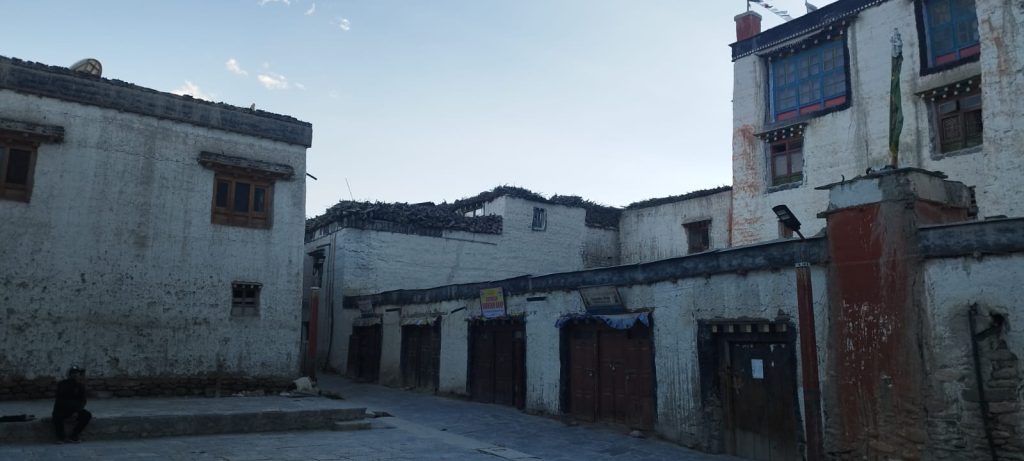
Lomanthang: Despite its rich cultural, religious, and natural heritage, the ancient settlement of Lomanthang in Mustang remains largely underdeveloped as a tourist destination due to restrictive government policies and infrastructural limitations.
Located 180 kilometers from Beni in Myagdi and about 75 kilometers from Mustang’s district headquarters, Jomsom, Lomanthang is renowned for its 600-year-old walled city, ancient monasteries, Tibetan culture, and unique landscapes. However, compared to nearby attractions like Marpha, Jomsom, Kagbeni, and Muktinath, it receives significantly fewer foreign visitors.
High Entry Fee a Deterrent
Chairman of Lomanthang Rural Municipality, Tasi Nharbu Gurung, highlighted that a key barrier to tourism is the $500 entry fee for a 10-day permit required to visit Lomanthang and Lo-Ghekar Damodarkunda areas. “This restricted policy has discouraged potential foreign tourists,” Gurung said, adding that relaxing such fees could substantially boost local livelihoods through tourism.
Border Opportunities Unused
Lomanthang shares a border with Tibet (China) and once served as a crucial trilateral trade route between Nepal, India, and Tibet from the 15th to 20th centuries. Although an Immigration Office and Armed Police Border Outpost were inaugurated at Korola point in 2024, they remain underutilized. Gurung criticized the lack of functioning cross-border trade infrastructure, calling it a missed economic opportunity.
Additionally, the absence of food and livestock quarantine facilities further hampers potential trade through the border.
Healthcare and Rescue Limitations
Lomanthang’s remote location also presents serious challenges in emergency healthcare. Gurung revealed that helicopter rescues require prior Home Ministry approval, which has led to avoidable deaths in the past. A newly constructed hospital also remains under-equipped and understaffed, despite repeated appeals to the provincial and federal governments.
Cultural and Historic Wealth Untapped
With a population of around 2,000 people, Lomanthang is not only a gateway to Upper Mustang but also a symbol of Tibetan-Buddhist heritage, home to ancient caves, royal palaces, and monasteries. Historically the capital of the Lo Kingdom from the 13th century, it retained a semi-autonomous Buddhist monarchy until Nepal became a republic. The last king, Jigme Dorje Palbar Bista, was revered as a cultural figurehead.
“We are failing to tap into the site’s vast tourism potential,” said Gurung. He believes that with government support and improved infrastructure, Lomanthang could become a major destination for cultural, historical, and spiritual tourism.


प्रतिक्रिया दिनुहोस्